0%
Heritage // Est. 1916

Engineered Precision Over Four Generations.

A saddler walked out of Bohemia in 1896 and started delivering coal by horse and cart. Four generations later the same family keeps Swiss kitchens, plant rooms and fire systems running. The tools changed. Nothing else did.

One family, four generations,

and a hundred and thirty years of call-outs.

Not a heritage story for its own sake. It is the reason a small firm in Winterthur behaves like an old one: work signed off by the person who did it, and a name on the van that somebody has to live with afterwards.

Cainsdorf bei Zwickau
1896

A saddler leaves Bohemia

Josef Vaclav Machac, a journeyman saddler, walks north out of Bohemia into Saxony and stops at Cainsdorf, outside Zwickau. He marries Minna and opens a general store — briquettes, bundled firewood, feed, potatoes — and takes the orders out to the village himself, by horse and cart.
16 June 1916
1916

The round becomes a firm

On 16 June the cart round is registered as a family business. It has stayed in the family, and in private hands, every day since — through two currencies, two states and four generations.

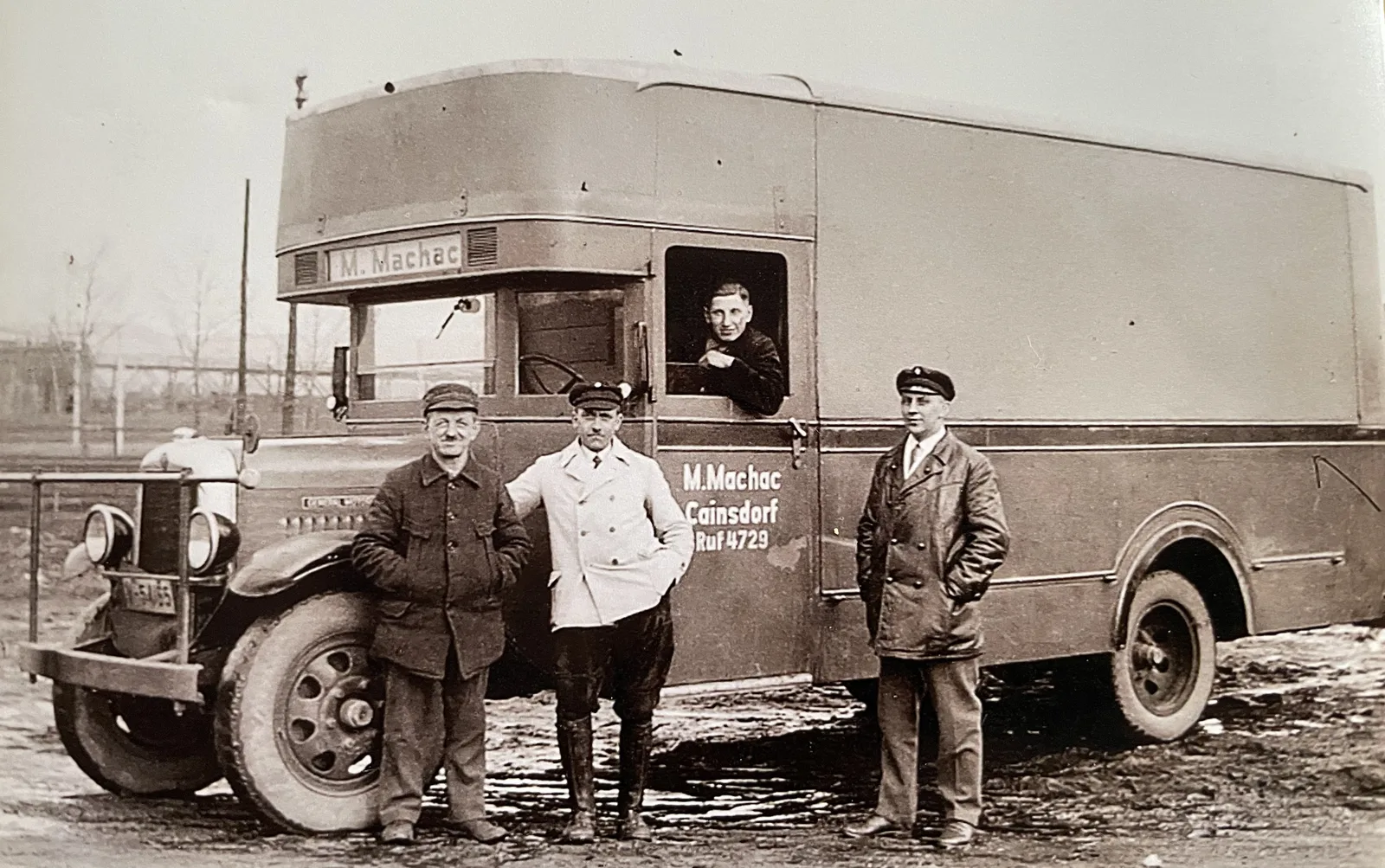
Three men and a driver standing beside a Machac furniture pantechnicon on a muddy yard, the cab lettered “M. Machac, Cainsdorf, Ruf 4729”.
1920s

A garage, a workshop, a warehouse

Behind the shop the family builds a large garage with a workshop and a furniture store. Lorries and coaches are bought one at a time, as they can be afforded. In a family business everybody is needed, so everybody works.

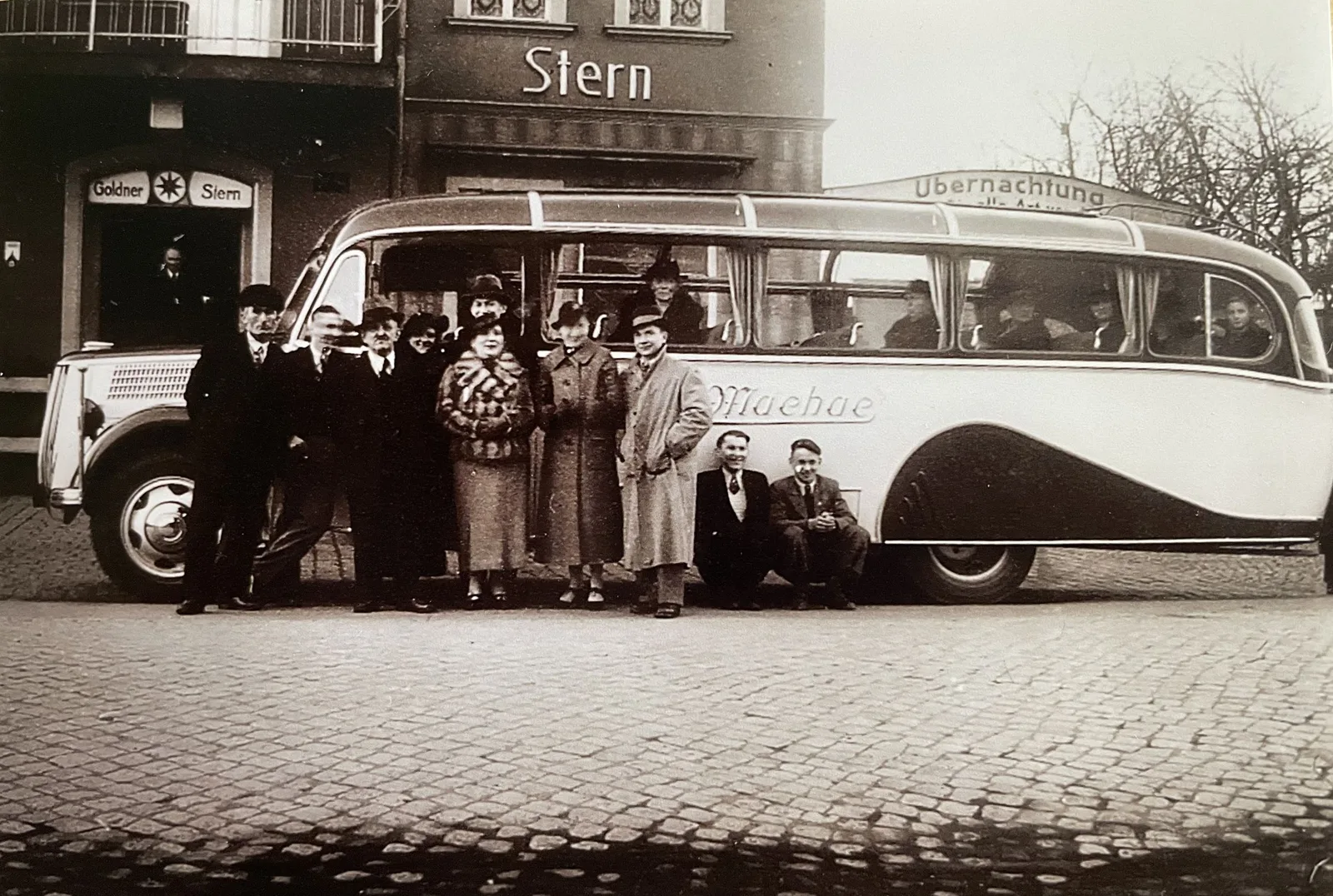
A 1930s Machac motor coach outside the Goldner Stern inn, its passengers and crew lined up along the cobbles for the photograph.
1930s

Zwickau – Karlsbad, daily

Karl Machac Sen. drives the scheduled coach between Zwickau and Karlsbad, every day, on a timetable. A service people set their morning by is a different kind of promise from a job you finish and leave.

Workshop, Cainsdorf
1940s

Rebuilt in our own workshop

Every vehicle in the yard is built up and repaired in-house — engine, gearbox, body, paint. There is no supplier to call and no warranty to claim against. You learn to fix a thing properly when it is the only one you have.

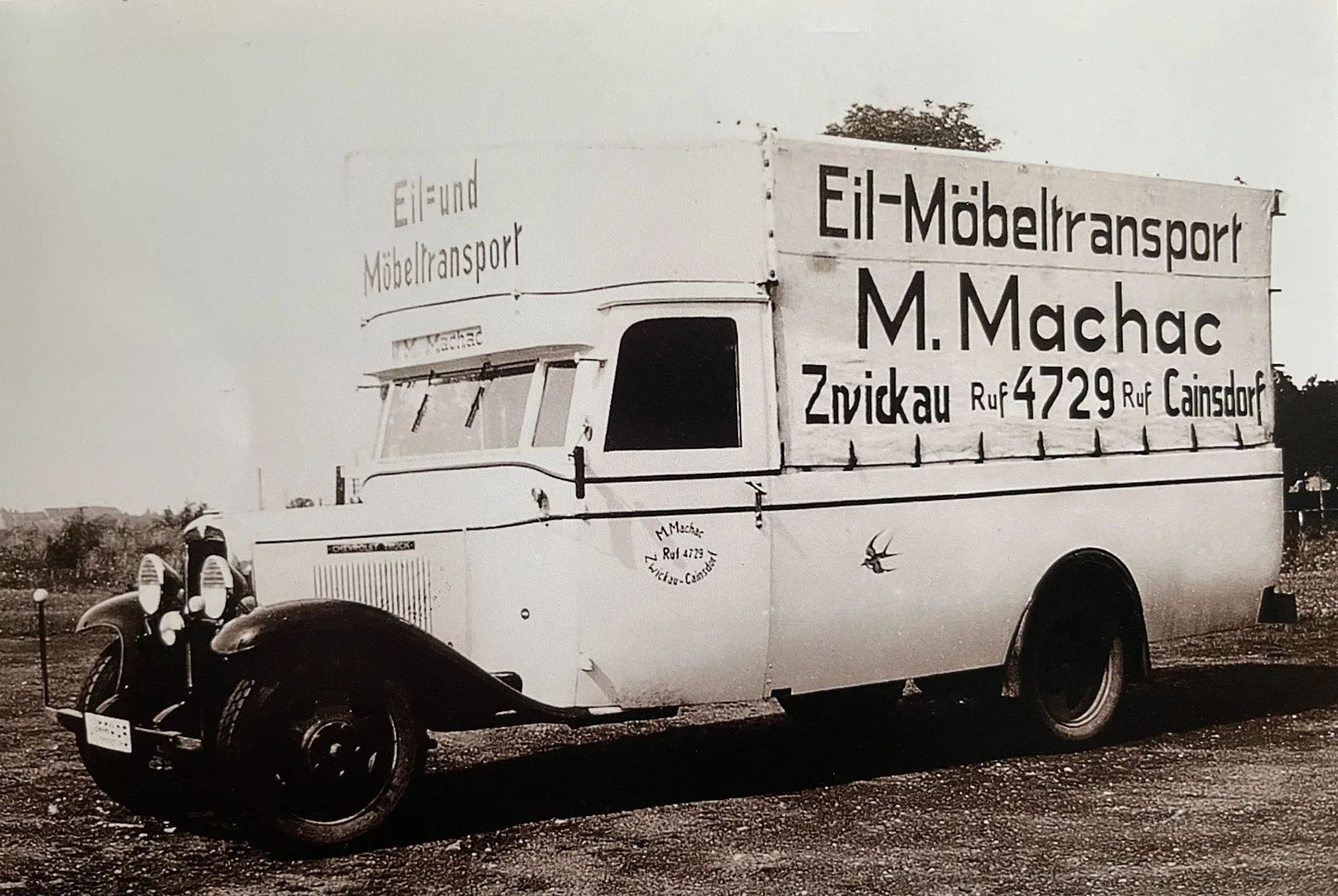
A Machac express furniture lorry lettered “Eil-Möbeltransport M. Machac, Zwickau Ruf 4729 Cainsdorf”, with a swallow painted on the cab door.
1970s

“Der sorgfältige Umzug”

The firm takes a name for what it actually does: the careful move. Removals with the kitchen refitted at the other end, clearances, and the loads nobody else wants — grand pianos, uprights, safes, antiques.

Cainsdorf
2019

103 years, never sold

The German company closes its books after more than a century of trading, having never once left the family or been run by anyone else. Diligence and seriousness, is how the fourth generation describes the reason.

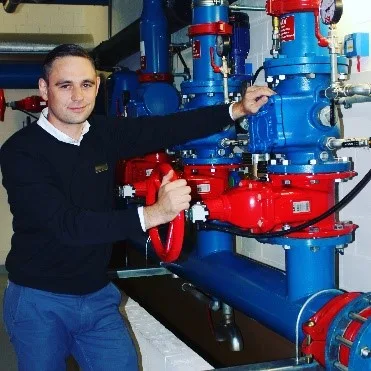
Portrait of Peter Josef Machac.
2022

TSPM GmbH, Winterthur

Peter Josef Machac enters the trade in the commercial register of the canton of Zürich on 9 December: the technology, upkeep and safety of buildings and the equipment inside them. Same work, different machines.

Winterthur
2026

A department you don't have to hire

Companies of all sizes need a maintenance department and almost none of them need a full-time one. So we became yours — one number, one team, and a technician who already knows which boiler is in your basement.

Fleet

The van, the workshop, the stock

Every technician carries the parts that fail most often, so the common faults are fixed on the first visit rather than quoted for a second one.

Pillars
What four generations actually taught us
01Fix it properly the first time

When the lorry in the yard is the only lorry you have, you do not bodge it. Every valve seating, wiring loom and control board we touch is put back to specification and written down, because we expect to be the ones called when it next goes wrong.

02Be near enough to turn up

A timetable is only a promise if you are close enough to keep it. We work out of Winterthur across the canton of Zürich — no call centre in another country, no dispatcher who has never seen your building.

03Put your name on the work

Four generations of having the family name painted on the side of the van is a powerful argument for doing the job well. You get an itemised quote, parts at what they cost, and photographs of the finished work.

“Maintenance shouldn't be an exercise in friction and uncertainty. For four generations this family has looked after the machinery other people depend on and rarely think about — carts, coaches, lorries, and now the plant room under your restaurant. The equipment changed. The standard is the one my great-grandfather set.”

Peter Josef MachacTSPM GmbH — Winterthur

How a request works

Three steps, no call centre, and one email that decides everything.

1
You Send It
& A Person Reads It

Your request arrives at our office in Winterthur, where somebody actually reads it — not a queue, not an auto-responder rehearsing how much your enquiry matters to us. Tell us what has stopped working, where it is, and how badly you need it back. Photographs help far more than adjectives.

2
We Answer
& Usually Ask Something

You get one of two replies, quickly: a price with a time we can be there, or a question. The question is almost always about access, make or model — the unglamorous detail that decides whether our technician arrives with the right part or with an apology.

3
You Get The Email
& Only Then Is It Booked

Nothing is reserved until a written booking confirmation reaches you by email. Not when you send the form. Not when we reply. When that email lands. Until it does, the slot is genuinely still free — which is our polite way of saying somebody else can take it.